
Tail spend rarely makes headlines, but the cost of ignoring it can be significant. When businesses leave their low-value, high-volume transactions unautomated, they don’t just miss a process opportunity. They create a systemic risk that compounds quietly across every category, team, and quarter.
Hidden Costs That Keep Accumulating
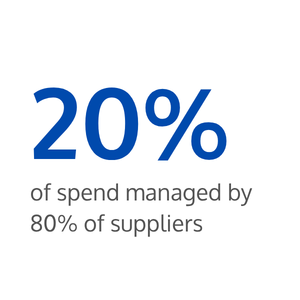
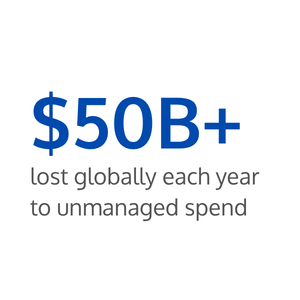
One of the most damaging misconceptions in procurement is that tail spend purchases sitting below a defined threshold is too small to warrant serious attention. In reality, the cost of neglecting it isn’t found in a single transaction. It’s buried across thousands of them.
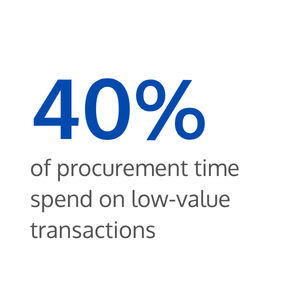
Without automation, each purchase in the tail requires a human touch. Someone searches for a supplier, raises a purchase order manually, routes it through an approval chain, and enters it into a system that may not even connect with finance. Multiply that by hundreds of low-value purchases per month, and the administrative burden becomes enormous. All while generating little strategic value for the organization.

These costs aren’t just financial. Delayed procurement slows down operations. Teams waiting on approvals for routine office supplies or maintenance items lose time that compounds across departments. The operational friction is real, even if it doesn’t show up cleanly on a balance sheet.
Supplier Sprawl and the Compliance Gap
Without a structured way to handle tail spend, procurement teams tend to fall back on ad-hoc sourcing. Stakeholders find their own suppliers, negotiate informally, and build one-off relationships that exist entirely outside the organization’s approved vendor network. This is where supplier sprawl begins.
Supplier sprawl creates a cascading compliance problem. When purchases happen outside the system, there’s no audit trail, no contract reference, and often no way to verify that a supplier meets the organization’s standards on quality, sustainability, or legal compliance. The larger the tail spend footprint, the wider that compliance gap grows.
-
No spend visibility: Finance and procurement can't report accurately on what's being spent, with whom, or against which budget codes when transactions are manually entered or missed entirely.
-
Duplicate suppliers: Without a centralized approved vendor list powered by automation, different teams routinely onboard the same vendor independently, multiplying onboarding overhead and diluting negotiating leverage.
-
Audit risk: Untracked purchases represent a regulatory exposure. In industries with strict procurement governance, even indirect spend must meet documentation and compliance requirements that manual processes routinely fail to satisfy.
- Maverick spending: When the procurement process is slow or cumbersome, stakeholders bypass it. Automation removes that friction so the right channel is also the easiest channel.
Lost Savings and Negotiating Power
Tail spend might represent a smaller portion of overall expenditure, but it still represents money. Organizations that automate this category consistently unlock savings that would otherwise remain invisible not through dramatic renegotiations, but through volume aggregation, price benchmarking, and pre-negotiated supplier arrangements.
When purchases are scattered, fragmented, and off-system, procurement teams have no way to aggregate demand. A company might be buying the same cleaning supplies from four different vendors at four different price points. Without automation creating a consolidated view, there’s no trigger to consolidate those purchases and command volume pricing.

For group companies managing multiple subsidiaries, the gap is even wider. Without automated consolidation, each entity negotiates individually, eliminating the volume advantage that comes from being part of a larger organization. A centralized tail spend platform corrects this immediately.
Procurement Team Burnout and Misaligned Focus
Skilled procurement professionals are hired to drive strategic value — to optimize category strategies, manage key supplier relationships, and contribute to organizational goals. When tail spend is unautomated, they spend a disproportionate amount of their working time processing low-complexity transactions instead.
This isn’t just a morale issue. It’s a talent utilization problem. Organizations pay for strategic procurement capacity and get manual transaction processing in return. The result is a procurement function that can’t scale, can’t focus, and can’t deliver on its actual mandate.
Automation solves this by creating a self-service procurement model for tail spend. When business units can fulfill routine requirements through a structured marketplace with pre-vetted suppliers and pre-negotiated pricing, procurement teams are freed from the operational noise. They can redirect their expertise toward initiatives that actually move the needle.
The Data Blind Spot
Every unautomated tail spend transaction is a missed data point. Over time, these gaps accumulate into a significant analytics blind spot. Procurement leaders trying to understand category performance, supplier dependency, or cost trends are working from incomplete data and making decisions accordingly.
Spend analytics tools are only as useful as the data they receive. When tail spend flows through informal channels, emails, credit cards, verbal approvals, it never enters the system in a structured way. Categories can’t be properly coded. Suppliers can’t be evaluated. Budget variances can’t be explained with confidence.
Automation brings tail spend into the same data ecosystem as strategic spend. Every purchase is logged, coded, attributed, and available for analysis. That visibility is what allows procurement teams to identify consolidation opportunities, flag anomalies, and build credible business cases for process improvement.