
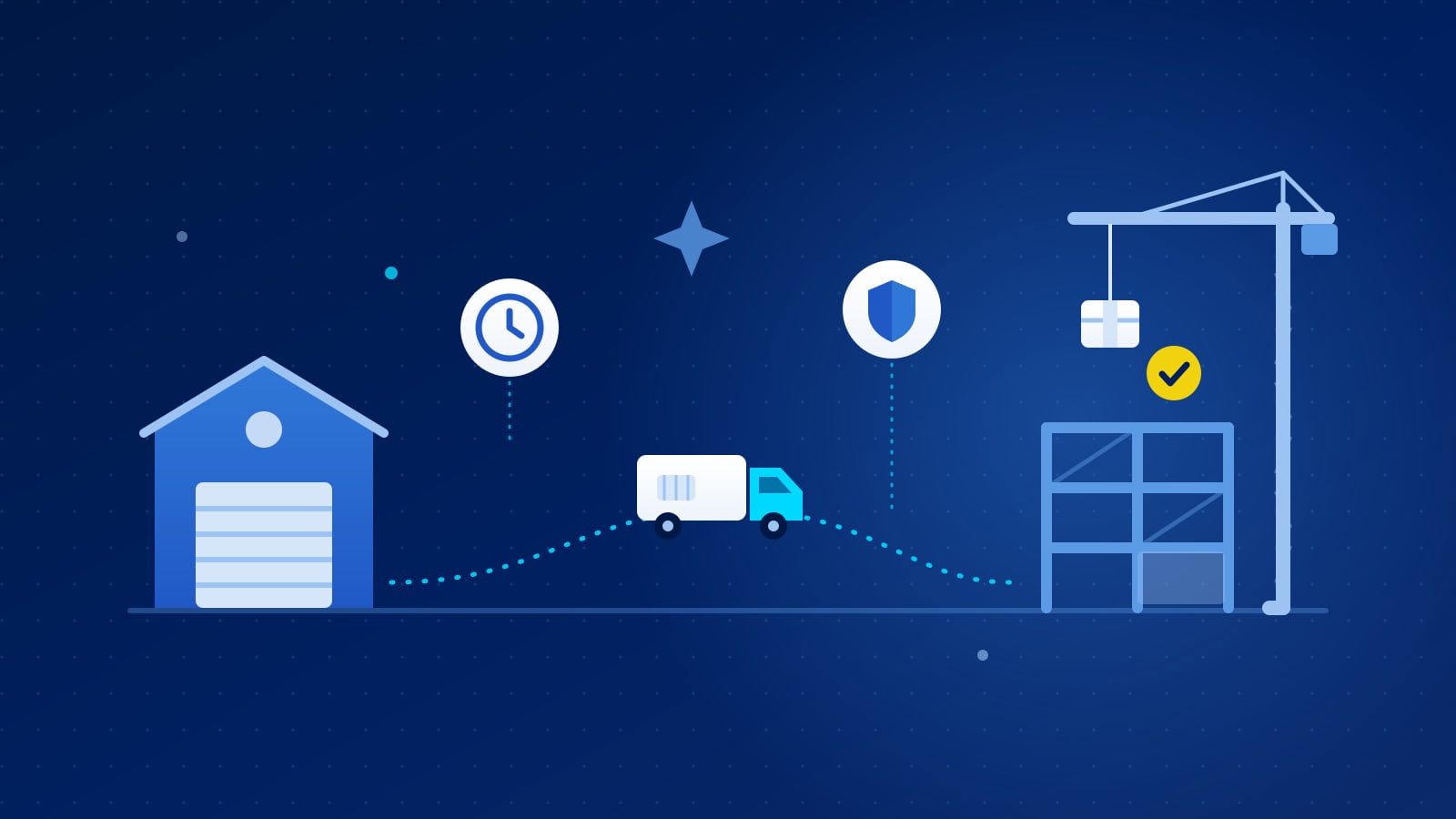
Construction tail spend is the stream of small, unplanned purchases a project makes outside its main subcontracts and material orders: site consumables, hand tools, spare parts and the urgent buys that keep a crew working. On sites in the UAE and Saudi Arabia these are often bought in a hurry, by site teams, from whoever can deliver. The answer is not to slow them down. It is to give each kind of buy a fast route that still carries control.
What counts as construction tail spend?
The big money on a project sits in a few places: subcontract packages, steel, concrete, mechanical and electrical equipment. Those are planned, tendered and tracked. The tail is everything that grows around them.
- Site consumables. Personal protective equipment, cutting discs, fixings, sealants, tapes, cable ties, marking paint, sandbags, barrier mesh.
- Tools and small equipment. Drills, grinders, levels, ladders, extension leads, replacement batteries and the tools that go missing between shifts.
- Urgent parts. A hydraulic hose for an excavator, a filter for a generator, a fitting for a pump, a part for a tower light.
- Site welfare and set-up. Water coolers, cabin furniture, first aid stock, signage, small items for a new site office.
- One-off needs. A specialist fixing the design calls for, a rental item for a single task, a test kit an inspector asks for.
Each line is small. Together they touch every site, every week, and they are bought by engineers, foremen and site administrators whose real job is building, not buying.
Why does ad hoc buying grow so fast on construction sites?
Because time on site is expensive and a stopped crew costs more than almost any small purchase. When a hose bursts at the start of a shift, the site engineer calls the nearest supplier and pays what is asked. That is the right call on the day. Repeated across many sites and many months, it builds a long supplier list, unchecked prices and invoices that arrive with no purchase order behind them.
A few things make it worse in the Gulf:
- Remote and spread-out sites. A project outside a city may be far from the suppliers procurement knows, so site teams find their own.
- Many projects, many buyers. Each project often runs its own small purchasing, so a contractor buys the same consumables from different suppliers at different prices.
- Petty cash and cards. Urgent buys are paid on the spot and coded later, if at all.
- Cross-border work. A contractor active in both the UAE and Saudi Arabia needs local suppliers in each, and the list built in one country rarely helps in the other.
- Shift patterns. Requests come early in the morning and late in the day, often outside office hours.
How do you balance speed and control on site?
Treat speed and control as a design problem, not a trade-off. The same thinking as any tail spend management programme applies, shaped around how a site actually runs.
Recurring consumables go to a catalogue. Most of what a site uses every week is predictable. Agree prices once, for all projects, and let site teams order in a few clicks with delivery to site. This removes the bulk of repeat requests and gives the contractor one price across projects.
One-off needs go to a fast, competed sourcing process. A specialist fixing or a rental item should still be quoted by more than one supplier. The process has to be quick enough that nobody is tempted to skip it. Our guide on how to compare supplier quotes fairly covers what to weigh beyond price, including delivery and terms, which matter as much as price on a live site.
Urgent parts go to pre-agreed suppliers. Agree in advance, region by region, who can deliver critical parts quickly, on what terms, and up to what value. Then an urgent buy is a quick decision inside known limits, not a scramble. Our article on spot buy procurement explains how to stop urgent buys leaking outside the rules.
Exceptions go to a buying desk. Some requests fit no route: the part nobody can identify, the supplier nobody has used, the item that needs to reach a remote site by tomorrow. A small team of experienced buyers gives those a home instead of leaving them with the site engineer.
What does local supplier coverage mean in practice?
Local coverage is the difference between a route that works and one that site teams ignore. A catalogue supplier based in one city is little use to a project several hours away if it cannot deliver there.
Questions worth asking for each region where you have sites:
- Who can deliver to site, not just to an office, and how quickly?
- Who carries the consumables and parts your sites use most, in stock rather than to order?
- Are the suppliers checked before the first order? A trade licence, tax registration and bank details should be verified once, before money moves.
- Is there more than one option per category, so a stock-out does not send the site back to buying on its own?
For contractors working in both the UAE and Saudi Arabia, build the list country by country. Coverage in one does not carry over to the other.
Which controls work without stopping the crew?
Site teams accept controls that are quick and clear. Long approval chains for small amounts mostly teach people to buy around the process.
- Value limits by role and route. A site engineer can approve an urgent part up to an agreed limit; above it, the request goes to the project manager.
- One intake point for every project. Every request starts in the same place, so nothing arrives as a surprise invoice at month end.
- Coding at the point of request. Project and cost code are captured when the request is raised, not reconstructed later.
- An audit trail by default. Who asked, who quoted, who approved and what was paid, recorded automatically.
- Contractor-wide visibility. Small spend across all projects in one view, so the same item bought at different prices shows up.
Where does technology help?
On a construction project, most of the effort in a small purchase is not the decision. It is finding a supplier who can deliver to site, getting quotes, chasing replies and keeping records. That is the work software should take off site teams.
METIS, our AI-native tail spend platform, was built for this kind of purchase. A requester describes the need in plain English, by chat, voice, email or a document. AI agents find suppliers, issue the RFQ, score bids on price, delivery, terms and supplier risk, and negotiate inside limits the contractor sets. The result goes through the contractor's own approval chain and the purchase order is issued with an audit trail. Recurring items sit in a catalogue, one-off needs go to the sourcing agents and exceptions go to a Buying Desk, all on one platform, with live programmes across the UAE, Saudi Arabia, Qatar, Kuwait and Oman. You can see the steps on how it works.
Next steps for a contractor
- Pull a year of small purchases from purchase orders, invoices, cards and petty cash, starting with one or two projects if the whole portfolio is too much.
- Sort them into routes: recurring consumables, one-off needs, urgent parts and exceptions.
- Agree urgent supplier lists by region with site engineers, with limits they can live with.
- Move recurring consumables into a catalogue with delivery to site.
- Set one intake point across projects and measure the time from request to purchase order from the first week.
Start with the purchases that stop work. On most sites that means urgent parts and equipment spares, because they are frequent, irregular and visible to everyone on site.