
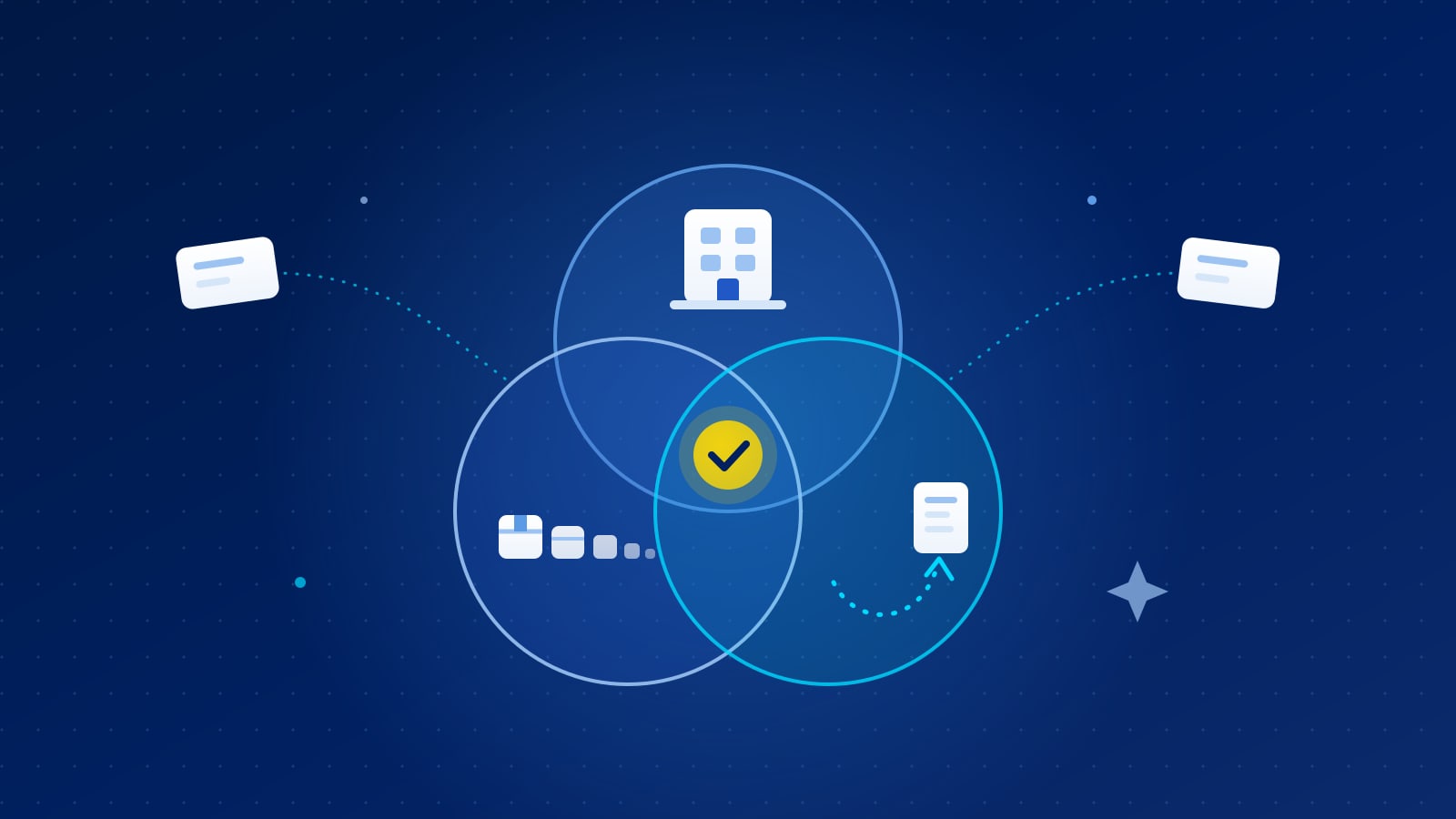
Tail spend, indirect spend and maverick spend describe the same money from three angles. Indirect spend is about what you buy: everything that runs the business rather than goes into the product. Tail spend is about how the spend is spread: the long list of small, infrequent purchases. Maverick spend is about how it was bought: outside the agreed process. One purchase can be all three at once, and that overlap is where control slips.
What is indirect spend?
Indirect spend is everything the organisation buys to keep itself running, as opposed to what goes into the goods or services it sells. Office supplies, IT equipment, software, facilities maintenance, cleaning, travel, marketing services, training and professional services are all indirect.
The definition is about the purpose of the purchase, not its size. A multi-year facilities management contract is indirect spend, and so is a box of printer paper. Most organisations have a category team for the big indirect contracts and very little structure for the rest.
The opposite is direct spend: raw materials, components and packaging that end up in the product. We cover the split, and the tail that grows on both sides of it, in direct vs indirect procurement.
What is tail spend?
Tail spend is the long list of low-value, infrequent purchases spread across many suppliers. It is defined by distribution, not by category. Sort a year of spend by supplier and the tail is the long run of vendors with only a few small invoices each.
Tail spend is mostly indirect, but not entirely. A maintenance team buying a one-off spare part for a production line is buying direct-side tail. Where exactly the line sits is a choice each organisation makes, usually as a purchase order value per order; we look at how to set it in what PO value should count as tail spend.
If you want the full picture of what tail spend costs and how to spot it, start with what tail spend is and the warning signs.
What is maverick spend?
Maverick spend is any purchase made outside the agreed buying process: without a purchase order, from a supplier that is not approved, off contract when a contract exists, or split into smaller orders to stay under an approval level.
It is defined by behaviour, not by category or value. Some everyday examples:
- The off-contract laptop. A team buys from a retailer because the approved channel is slow, even though a negotiated agreement covers the same model.
- The card purchase. A manager pays for a software subscription on a corporate card, so it never appears as a supplier in the purchasing system.
- The retrospective order. A contractor does the work first and the purchase order is raised afterwards to match the invoice.
- The split order. One requirement is broken into several smaller orders so that none of them needs a higher approval.
Maverick spend is rarely dishonest. Most of it happens because the official route is slower or harder than the workaround, and people have a job to get done.
How do tail, indirect and maverick spend overlap?
Picture three overlapping circles.
- Indirect but not tail: the big, planned contracts. Facilities, IT outsourcing, fleet. Usually well managed by a category team.
- Tail but not indirect: small, irregular buys on the direct side, such as specialist spares or a one-off batch of packaging.
- Maverick but not tail: a large purchase made off contract. Rarer, but expensive when it happens.
- All three at once: the small, irregular, indirect purchase bought outside the process. This is the centre of the diagram, and it is where most organisations lose control.
The centre is crowded for a simple reason. Tail purchases are too small for a category manager and too irregular for a catalogue. When there is no easy route for them, people make their own, and the spend becomes maverick by default.
Why does the distinction matter?
Because each term points to a different fix, and fixing one does not fix the others.
- Indirect spend is a category problem. The answer is category strategy, contracts and supplier management for the large indirect areas.
- Tail spend is a capacity problem. There are too many small purchases for people to handle one by one, so the answer is a lighter, faster route that still competes each buy.
- Maverick spend is a route problem. People leave the process when it does not serve them. Policy and reminders help at the margins; a route that is faster than the workaround helps much more.
A common mistake is to treat maverick spend as a compliance issue alone. Tightening the rules without giving the tail a faster route usually pushes more buying onto cards and expense claims, where it is even harder to see.
How do you measure each one?
Use one data set, viewed three ways. Pull twelve months of purchase orders, invoices, card transactions and expense claims.
- For indirect spend, group by category and separate what goes into the product from what runs the business.
- For tail spend, sort by supplier and look at the long run of vendors with few, small transactions, below the threshold you chose.
- For maverick spend, flag purchases with no purchase order, a purchase order dated after the invoice, an unapproved supplier, or a pattern of orders just below an approval level.
The overlap of the second and third lists is your priority. That is where a new route will change behaviour fastest.
Where does a tail spend platform fit?
A tail spend platform gives the centre of the diagram a proper route, so the small, irregular purchase no longer needs a workaround. METIS, our AI-native tail spend platform, lets a requester describe the need in plain English by chat, voice, email or a document. AI agents find suppliers, issue the RFQ, score bids on price, delivery, terms and supplier risk, and negotiate inside limits you set. The result goes through your own approval chain, and the PO is issued with an audit trail. Request to approved purchase order takes around 48 hours instead of two to three weeks, which removes most of the reason to buy around the process.
What should you do next?
- Agree the definitions with finance and procurement, including the tail threshold, so everyone is counting the same thing.
- Run the three views on one year of data and find the overlap.
- Pick the categories in the centre with the most transactions, not the most value.
- Give them a route faster than the workaround, then measure whether off-process buying falls.
To see how the route works in practice, read how METIS works.