
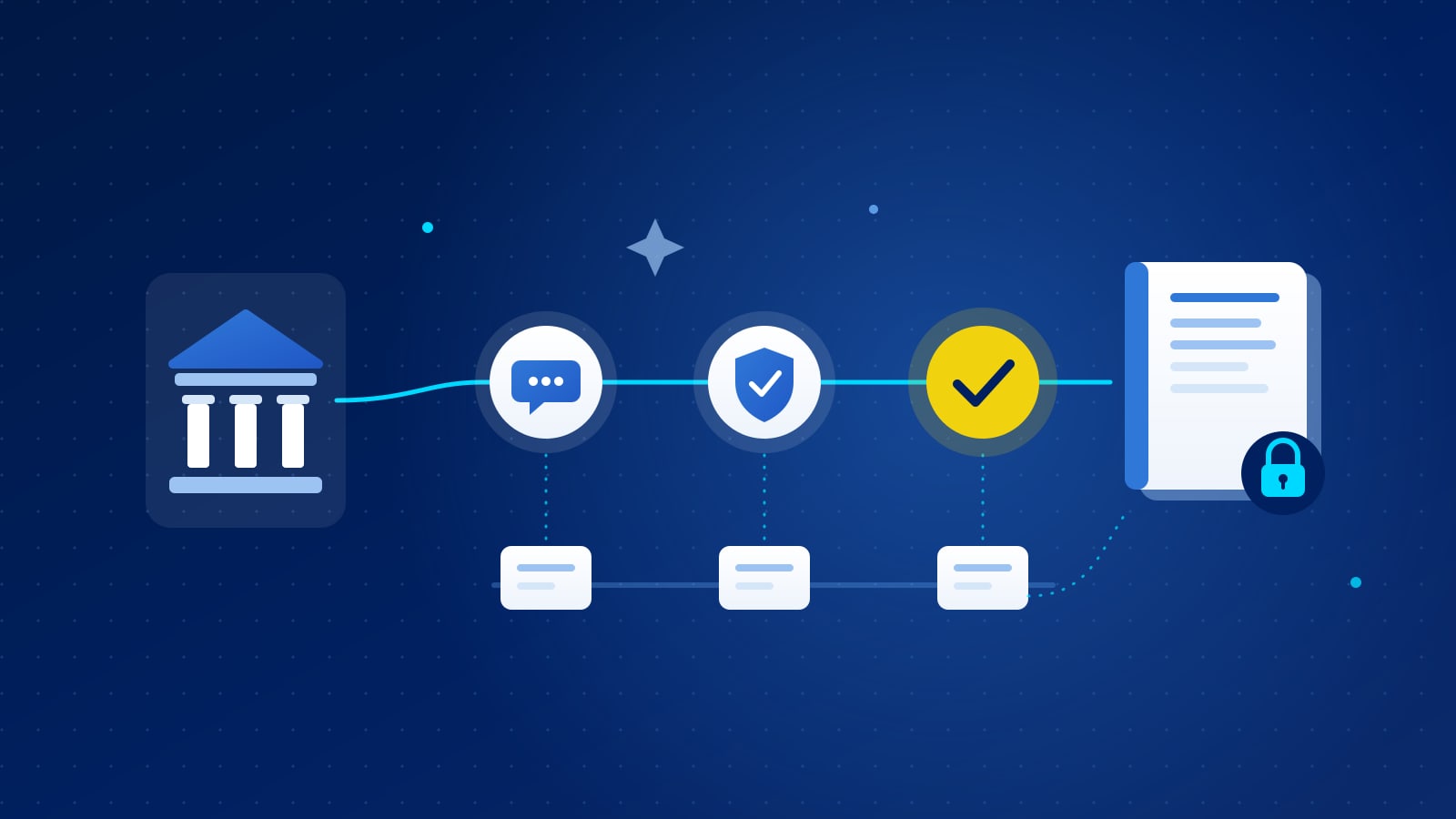
In banking procurement, tail spend is the long list of small purchases made outside the main contracts. The control that matters most is an audit trail: a record, for every purchase, of who asked for it, which suppliers were checked, which quotes were compared, who approved it under which authority, and which purchase order was issued. Banks do not need a heavier process for small purchases. They need one that leaves a complete record by default.
Why does tail spend matter more in a bank?
Most organisations treat a small purchase as a small risk. A bank cannot, for three reasons.
- Every supplier is a door into the bank. A one-off IT accessory, a contractor for a branch fit-out or a small software tool can touch premises, systems or data. The value of the order says nothing about the access it brings.
- Internal audit looks at the process, not the amount. An auditor sampling purchases asks the same questions of a small order as of a large one: was it approved by the right person, was the supplier checked, was there competition.
- Small purchases are where the gaps hide. Large contracts run through committees and leave a paper trail. The tail runs through email, cards and one quote from a supplier someone already knew.
A typical bank tail includes branch maintenance parts, office and IT accessories, printing, furniture, event support, training, small professional services and one-off software. Each item is small. Together they produce a long supplier list and a steady stream of requests from people whose job is banking, not buying.
What should an audit trail for small purchases contain?
Think of the audit trail as the answer to every question an auditor might ask, captured while the purchase happens rather than rebuilt afterwards from inboxes.
- The request. Who asked, what for, when, and the cost centre it belongs to.
- The sourcing. Which suppliers were invited, which responded, and what each one quoted.
- The comparison. How the bids were scored, on price, delivery, terms and supplier risk, and why the winner won.
- The vendor checks. The supplier's trade licence, tax registration and bank details, verified before the first order rather than after.
- The approval. Who approved, at what level, and under which delegation of authority.
- The order. The purchase order itself, linked to everything above.
If any of these lives only in someone's email, the trail has a gap. The test is simple: pick a small purchase from last quarter at random and see how long it takes to answer all six questions. If the answer is "a few days of digging", the control exists on paper only.
How should delegation of authority work for tail spend?
Delegation of authority is where banks are usually strongest, and where the tail most often slips through. The matrix is clear for large spend. For small purchases, people find ways around it: splitting orders to stay under a threshold, approving by email reply, or buying first and raising the order afterwards.
A few practices close those gaps:
- Route every purchase through the same approval chain, whatever its size. Small orders can have a lighter chain, but it should be the bank's own chain, applied by the system, not remembered by the requester.
- Approve the purchase, not the invoice. Approval should happen before the order is placed, with the quotes and the recommendation in front of the approver.
- Watch for split orders. Several small orders to the same supplier for related items in a short period deserve a second look.
- Keep the reason with the decision. An approver who picks a supplier other than the recommended one should record why, in the same place as the approval.
If you have not set a clear line for what counts as tail spend, start with how to set a tail spend threshold.
How do you check suppliers you will only use once?
This is the hardest part of tail spend in a bank. Onboarding a supplier properly takes effort, and for a one-off order of modest value that effort feels out of proportion. So the check gets skipped, or the order goes to a familiar supplier who is not the right one.
There are two ways out.
- Buy from suppliers who are already verified. A network of pre-checked suppliers means the vendor checks happen once, centrally, and every later purchase inherits them.
- Make onboarding fast enough that nobody avoids it. When a new supplier is needed, a short, standard set of checks with a clear owner and a written response time keeps the process honest. Our article on supplier onboarding time covers what slows it down.
Either way, the supplier record and its checks should sit alongside the purchase in the audit trail, not in a separate folder.
Where should the data sit?
Banks rightly ask where procurement data is stored. Purchase records contain supplier bank details, contract terms, internal cost centres and the names of the people who approved each order. Before choosing any platform for tail spend, ask:
- Where is the data hosted, and does it stay in the region?
- Who at the provider can access it, and how is that access logged?
- What security certifications does the provider hold, or which are in progress?
- Can your own systems receive the purchase orders, so the record of truth stays with you?
Ask for written answers, and have your information security team review them before a pilot, not after.
What does good look like?
A bank with good tail spend controls looks unremarkable from the outside. Requesters ask for what they need and get it quickly. Every purchase has competition where it should. Every supplier was checked before the first order. Every approval sits with the right person, and an auditor can pull the full story of any order in minutes.
That is the approach we built into METIS, CollectiveSpend's AI-native tail spend platform. A requester describes the need in plain English, AI agents find suppliers, issue the RFQ and score bids on price, delivery, terms and supplier risk, and the result goes through the bank's own approval chain before the purchase order is issued with an audit trail. METIS is hosted on AWS with regional data residency for GCC clients, and SOC 2 certification is in progress. You can see the full flow on how it works.
Practical next steps
- Sample the tail. Pick a handful of recent small purchases and try to answer the six audit trail questions for each. Note where the answers live.
- Map the gaps. Mark which steps happen outside any system: email approvals, quotes in inboxes, supplier checks done after the order.
- Fix approval first. Make sure every purchase, however small, passes through the bank's own delegation of authority before the order is placed.
- Decide on supplier checks. Choose between a pre-verified supplier network, a faster onboarding route, or both.
- Ask the data questions early. Bring information security in before you evaluate tools.
For the wider picture, read our guide to tail spend management.