
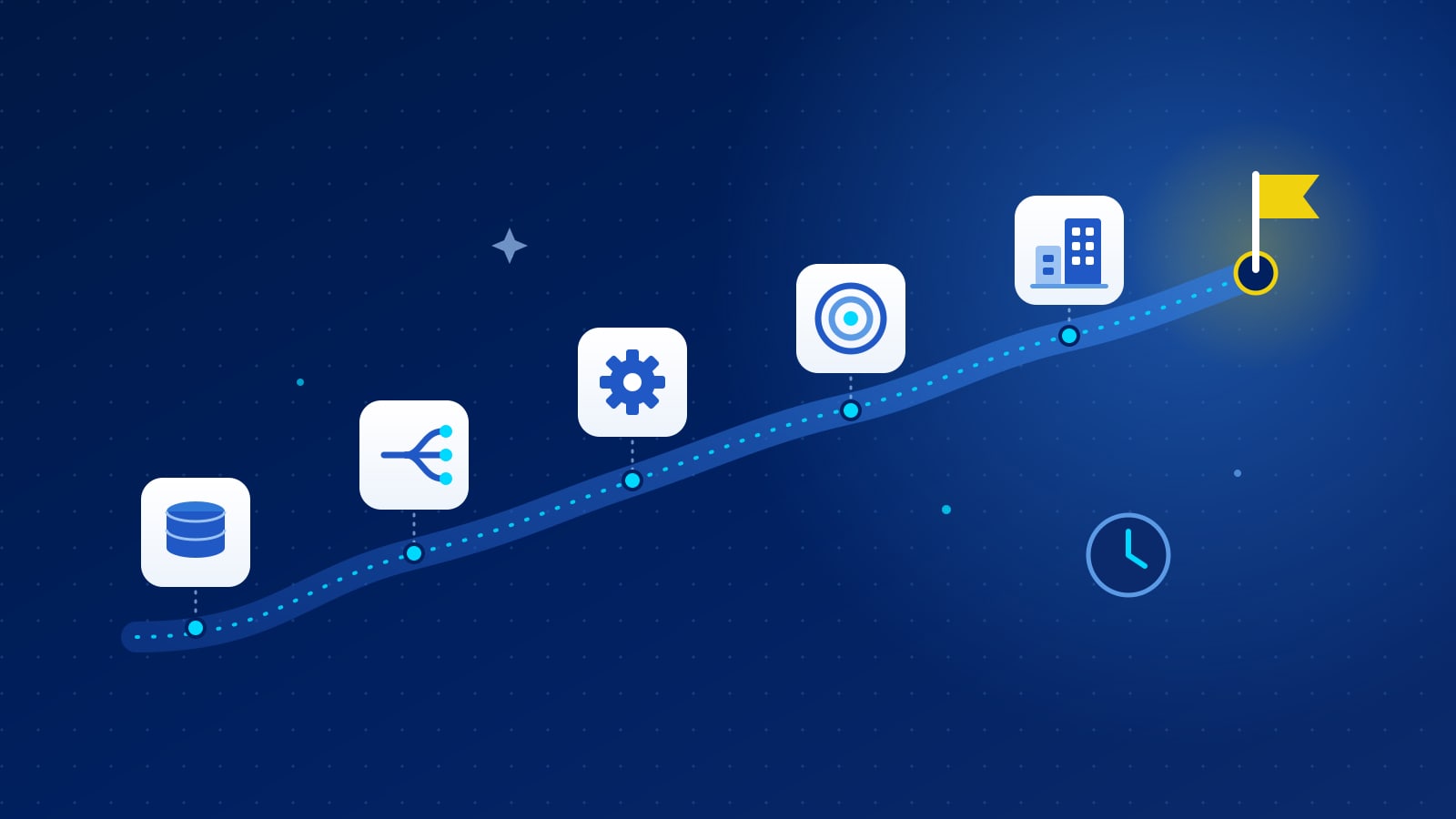
A tail spend platform implementation runs in five phases: prepare the data, design the buying routes, connect the platform to your ERP, run a pilot and then scale. The technical part is rarely what takes longest. A punchout integration typically takes two to three weeks including testing. The total length depends on how clean your data is, how quickly decisions get made and how many business units you bring in at once.
Why is there no single answer to how long it takes?
Because most of the work is not software. The platform can be configured quickly. What takes time is agreeing who buys what, through which route, with whose approval. Two organisations buying the same platform can have very different rollouts because one has already settled those questions and the other has not.
So rather than promise a date, it is more useful to look at each phase and what decides its length. If you know where your organisation stands on each, you can plan realistically.
Phase 1: Data
Every tail spend implementation starts with knowing what you buy today. That means pulling purchase orders, invoices, card statements and expense claims, grouping them by supplier and category, and finding the long list of suppliers with only a few transactions each.
What decides the length:
- Where the data lives. One ERP is quicker than several systems plus spreadsheets.
- How it is described. Free-text purchase order lines take longer to classify than coded ones.
- Supplier records. Duplicate and inactive suppliers need cleaning before anything is migrated.
You do not need perfect data to start. You need enough to see which categories carry the most volume and the most friction. Our guide to signs your business has a tail spend problem covers what to look for.
Phase 2: Which buying routes should you design first?
This is where the real decisions sit. Each kind of purchase needs a route: a catalogue for recurring items, a sourcing process for one-off needs, and a desk of experienced buyers for the exceptions that fit neither.
For each route you agree:
- Which categories it covers and which stay with category managers.
- The value ceiling per order.
- Who approves, and at which thresholds.
- Which suppliers are preferred or already contracted.
Start with the routes that carry the most volume. Recurring items usually suit a punchout catalogue first, while one-off needs are where an automated quote process or a buying desk earns its place.
What decides the length here is decision speed. If procurement, finance and the business units can agree routes and approval rules in a few working sessions, this phase is short. If every threshold needs a committee, it is not.
Phase 3: How long does ERP integration take?
Integration connects the platform to the system that holds your approvals, budgets and purchase orders. With a punchout connection, users start in the ERP, shop or request inside the tail spend platform, and the basket returns to the ERP for approval and the purchase order.
A punchout integration typically takes two to three weeks including testing. That assumes the ERP side has someone available to configure and test it, and that the cost centres, approval chains and supplier mappings were settled in the earlier phases.
What decides the length:
- IT availability. The integration waits if the ERP team is booked on other projects.
- Testing scope. End-to-end tests should cover a simple order, an order that needs a higher approval, a rejected order and a change after approval.
- Master data. Cost centres, units of measure and supplier identifiers have to match on both sides.
Phase 4: Pilot
A pilot puts real requests through the platform with a small group of users. Pick a business unit or site with steady demand for tail purchases and a sponsor who wants it to work.
During the pilot, watch:
- How long requests take from submission to purchase order.
- Where requests get stuck, and why.
- Which categories users bring that the routes did not anticipate.
- Whether approvers act quickly or let items sit.
The pilot is also where adoption problems show up early. If users keep buying around the platform, the cause is usually friction in the route design, not training. Fix it here, before more people see it.
What decides the length: enough transactions to learn from. A pilot with very little volume tells you very little.
Phase 5: Scale
Scaling adds business units, sites or countries in waves. Each wave reuses what the pilot taught you, so later waves are usually quicker than the first.
What decides the length:
- How different the units are. Units with their own ERP instance, approval rules or supplier base need their own configuration.
- Change management. Requesters need to know where to go and why the new route is easier than the old habit.
- Supplier onboarding. New suppliers need vendor checks, such as a trade licence and tax registration, before they can be used.
What makes an implementation slow?
Across all five phases, the same few things stretch timelines:
- No single owner. Someone needs authority to settle route and approval questions.
- Waiting for perfect data. Good enough data to start beats a long cleansing project.
- Too many units at once. A big launch multiplies every problem the pilot would have caught.
- Approval chains nobody has reviewed. A fast platform cannot help if an order waits days for a signature.
How METIS approaches implementation
METIS, our AI-native tail spend platform, offers three ways to buy on one platform: a catalogue for recurring items, AI sourcing agents for one-off needs, and a Buying Desk for exceptions. It connects by punchout with SAP, SAP Ariba, Oracle, Microsoft, Coupa, Zycus and Ivalua, and every purchase still goes through the client's own approval chain before the purchase order is issued with an audit trail. You can see the steps on how it works.
Next steps
- Pull your tail spend data and find the categories with the most volume and friction.
- Name one owner with authority over routes and approval rules.
- Book ERP team time for integration and testing early.
- Choose a pilot unit with steady demand and a willing sponsor.
- Plan the scale-up in waves, not as a single launch.
For the wider picture of how routes, consolidation and measurement fit together, read our tail spend management guide.